
FMCSA HOS Waiver Lets Fuel Truckers Drive Up to 16 Hours for 90 Days
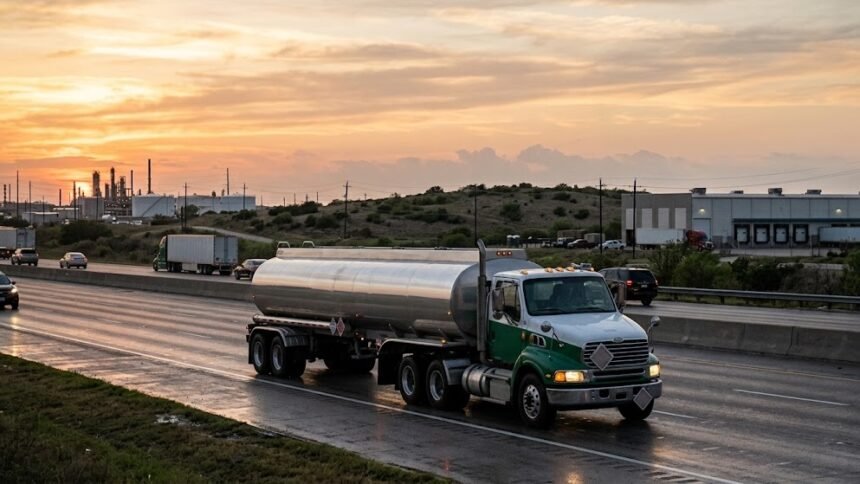
A major temporary change to federal Hours of Service rules is now in effect for truck drivers hauling gasoline and diesel across the United States.
The Federal Motor Carrier Safety Administration issued a 90-day nationwide HOS waiver that allows eligible fuel haulers to drive for as many as 16 hours within a 24-hour period, significantly more than drivers normally receive under federal property-carrying HOS regulations.
The waiver took effect at 12:00 a.m. on September 16, 2026, and remains in force through 11:59 p.m. on December 16, 2026. It applies to motor carriers and drivers transporting gasoline and diesel fuel in interstate commerce.
Under normal federal rules, most property-carrying drivers may drive a maximum of 11 hours after 10 consecutive hours off duty, and that driving generally must take place within a 14-hour driving window.
The new waiver changes that equation substantially for qualifying fuel operations.
Drivers can actually drive up to 16 hours
One important detail has been lost in some headlines.
This is not simply a 16-hour on-duty window. FMCSA’s waiver states that an eligible driver must not drive more than 16 hours in any 24-hour period. The 16-hour ceiling applies even if the driver is also operating under another exemption, waiver or exception.
That gives fuel carriers considerably more flexibility to move gasoline and diesel during a period of tight supplies and unusually high prices.
The government says the action is intended to keep fuel moving as supply-chain disruptions combine with seasonal transportation and agricultural demand. FMCSA described the current situation as involving “acute fuel supply issues” and said additional flexibility could help maintain timely fuel distribution.
The timing is significant for trucking companies.
According to the U.S. Energy Information Administration, the national retail average for diesel reached $6.285 per gallon on September 14. EIA said that was the highest nominal price in the history of its weekly series, which dates to 1994.
Higher diesel costs quickly spread beyond trucking because fuel prices affect freight rates, agriculture, construction and the cost of moving consumer goods.
The waiver does not eliminate rest requirements
The new rule gives drivers considerably more operating time, but it does not remove fatigue protections entirely.
A driver using the waiver must take at least six consecutive hours in the sleeper berth during each 24-hour period. If the truck does not have a sleeper berth, FMCSA requires at least eight consecutive hours off duty.
There is another protection that could become particularly important for drivers.
If a trucker tells the carrier that immediate rest is needed because of fatigue, the carrier must allow the driver to find a suitable safe place to stop and provide at least 10 consecutive hours off duty before the driver returns to driving.
Drivers transitioning from operations covered by the waiver back into normal operations also may need a 10-hour break when their combined operating time reaches or exceeds 14 hours.
Not every fuel carrier can use the HOS waiver
FMCSA placed several restrictions on who qualifies.
Drivers still need a valid CDL and all endorsements required for the truck and cargo being transported. Drivers or carriers under an active out-of-service order cannot use the relief until that order has been formally rescinded.
Motor carriers with a conditional safety rating are also excluded. Drivers must carry either a physical or digital copy of the waiver and show it to law enforcement when requested.
The waiver does not suspend CDL rules, drug and alcohol testing requirements, hazardous materials regulations, insurance requirements, vehicle size and weight rules or other federal safety requirements that were not specifically waived.
Carriers also face additional reporting requirements. A crash involving a driver operating under the waiver must be reported to FMCSA within two business days, including information about the driver’s hours before the crash.
Interstate and intrastate trucking are treated differently
The federal waiver directly covers qualifying interstate commerce operations.
FMCSA says states cannot enforce rules against interstate carriers that conflict with the federal waiver while it is in effect. However, individual states may decide whether to adopt the same relief for purely intrastate fuel transportation.
That distinction means drivers should not assume every fuel load automatically qualifies simply because the truck is hauling diesel or gasoline.
For truckers operating under the waiver, the commodity being hauled, the carrier’s safety status and whether the operation falls under interstate commerce can all matter.
The change is one of the more significant temporary HOS actions affecting U.S. trucking in recent years. FreightWaves noted that most FMCSA waivers tend to be regional, while the last major nationwide waiver stretched back to the COVID-era emergency relief.
For the next three months, fuel haulers will have considerably more flexibility behind the wheel — but they will also be operating under a detailed set of safety and reporting conditions while federal officials watch how the waiver affects fuel availability and highway safety.

João Neto
Brasil do Trecho editorial team, covering trucks, buses, logistics, road transport and the Brazilian transportation industry.
Related News
 Read article: U.S. Allows Some Truckers to Drive Up to 16 Hours as Diesel Prices Surge
 Read article: Are U.S. Truckers Really Shutting Down on October 1? Here’s What We Know
 Read article: U.S. diesel rises to $6.529 a gallon, squeezing truckers’ margins
 Read article: Could American Truck Drivers Stop Working on October 1? What Drivers Need to Know