
Could American Truck Drivers Stop Working on October 1? What Drivers Need to Know
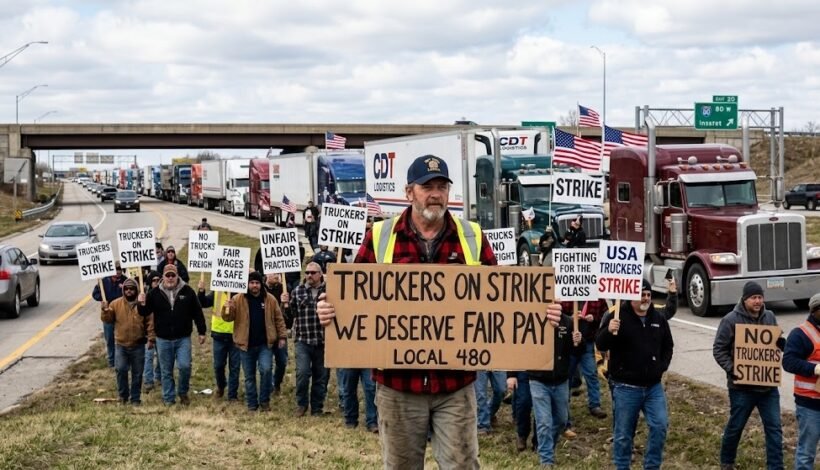
Calls for truckers to park their rigs on October 1 are spreading across social media, but a coordinated nationwide strike has not been confirmed. Some independent drivers say they may stop hauling freight as diesel costs continue to rise.
American truck drivers could see some independent operators park their trucks on October 1, 2026, as frustration over high diesel prices spreads across the trucking industry. However, there is no confirmed nationwide strike involving U.S. truck drivers, and claims that tens of thousands of trucks will stop moving on that date remain unverified.
The proposed shutdown has gained attention through social media videos and graphics urging drivers to stop hauling freight. Some posts warn of widespread delivery disruptions and empty store shelves, but they do not establish how many drivers have committed to participating.
Why are truck drivers talking about an October 1 shutdown?
Rising diesel prices are at the center of the discussion. Fuel is a major operating expense for trucking businesses, particularly independent owner-operators who pay for their own diesel, maintenance, insurance and equipment.
Drivers who cannot negotiate higher freight rates may find that a load no longer covers its operating costs when fuel prices increase sharply. The Owner-Operator Independent Drivers Association (OOIDA) has highlighted the pressure that rising diesel costs place on small trucking businesses.
For an owner-operator buying 200 gallons of diesel, every $1 increase per gallon adds $200 to the cost of that fill-up. Repeated across multiple trips, that difference can significantly affect the money left after expenses.
Is a nationwide trucker strike officially scheduled?
As of September 24, no verified national organizing effort has established that U.S. truck drivers will collectively stop working on October 1. OOIDA described much of the discussion as social media chatter and said it was monitoring the situation.
That does not mean every driver intends to keep working. Overdrive reported that Jeremy Johnson, an owner-operator known online as “The Disrespected Trucker,” said he plans to shut down and encourage other drivers to do the same. The publication also spoke with drivers who had heard little or nothing about a coordinated strike.
The distinction matters: individual drivers choosing not to accept loads would not, by itself, establish a nationwide trucking strike.
Why is a coordinated shutdown difficult to organize?
The U.S. trucking industry includes company drivers, independent owner-operators and small carriers working under different contracts and business arrangements. A decision by one group to stop hauling freight does not automatically apply to the others.
OOIDA has also explained that its membership structure limits its ability to organize a collective work stoppage. Unlike a labor union representing employees, the association includes independent business operators, raising potential antitrust concerns around coordinated boycotts or freight-rate actions.
Could freight deliveries be disrupted on October 1?
Local or individual disruptions are possible if drivers decide to park their trucks or decline loads. There is not enough verified information to conclude that October 1 will bring a nationwide freight shutdown or widespread shortages.
The proposed action has nevertheless reached beyond trucking social media. In California, the Nisei Farmers League raised the idea of an October 1 “No Movement of Goods Day” to draw attention to fuel costs affecting agriculture and transportation. Its proposal did not establish that a national network of carriers or drivers had agreed to participate.
For now, October 1 remains a proposed date for action, not a confirmed nationwide stoppage. Whether drivers park their rigs, continue hauling or take part in smaller demonstrations will become clearer as the date approaches.

João Neto
Brasil do Trecho editorial team, covering trucks, buses, logistics, road transport and the Brazilian transportation industry.
Related News
 Read article: Volvo Is Preparing a New Heavy-Duty Truck for the U.S. — and Says It Will Be Unlike Anything Before
 Read article: FMCSA HOS Waiver Lets Fuel Truckers Drive Up to 16 Hours for 90 Days
 Read article: U.S. Truckload Rates Jump 11.3% as Freight Shipments End 42-Month Decline
 Read article: Wisconsin Trucking Company Shuts Down After Bankruptcy and Failed Sale